
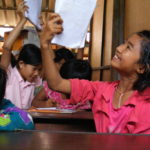
The quality of education in migrant learning centers (MLCs) varies in the Mae Sot area due to the lack of a governing body to establish, monitor and uphold standards. In response to this, World Education developed the Master Trainer program, which was noted as a significant contributor to teacher development and teaching quality in MLCs. In recent years, World Education has shifted its strategy from directly implementing these programs to increasing the capacity of local organizations to carry out these functions. When looking for such an organization, World Education quickly identified Mobile Education Partnerships (MEP), who, since 2002, have been providing teacher training in displaced, refugee,...
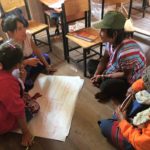
School Committees have the potential to act as key mechanisms in strengthening education services for ethnic minority communities.Recent government-led national education planning has resulted in the development of the Burma National Education Sector Plan (NESP). Given the focus on the state system, and the lack of reference to ethnic and refugee concerns in the NESP, an increased need for engagement between state and non-state actors is required to ensure that the role of existing providers, and communities themselves, are recognized. Through PLE, the Karen Education Department has increasingly enhanced engagement on behalf of its beneficiaries in national and state level policy discourse, and raised its...
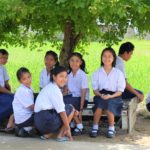
Until recently, migrant children from Burma living on the Thai-Burma border studying in migrant learning centers (MLCs) were not receiving an accredited education and older children often did not have access to non-formal education systems such as the Thai Non Formal Education (NFE) program. The NFE Director in Mae Sot expressed concern that it would not be possible for migrant students to study NFE at MLCs as the quality of teaching was not strong enough. This meant that migrant students would have to travel to a more distant NFE center or have no access to an education at all. In addition, migrant students who wished...
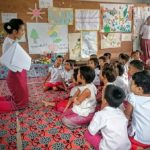
Agreements bring further progress towards the PLE Education Convergence Strategy The Mon National Education Committee (MNEC) is the first ethnic organization to formally collaborate with the Burma Ministry of Education (MoE) via the Mon State Education Department. In 1995 students studying at MNEC supported high schools sat for the National Matriculation Exam for the first time following the signing of the National Ceasefire Agreement. The agreement allowed students from MNEC schools to both transfer to government schools and to sit for the standard matriculation exam, meaning that all students completing education through the Mon National System (MNS) were permitted to take the same accredited exam that...
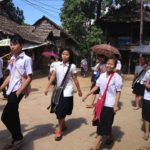
Refugee communities face on-going uncertainty about the future and the education of their children and youth amid the rapid pace of political and social change in Burma. Community-led planning initiatives help to ensure effective solutions in this uncertain climate. With the support of the USAID-funded Project for Local Empowerment (PLE), the Karen Refugee Committee- Education Entity’s (KRCEE) Department of Higher Education has been able to foster effective solutions by bringing together border and education stakeholders to create community-led preparations for return of refugees and refugee education back to Burma. Through PLE technical and financial support, KRCEE has facilitated cross-border exploratory visits and piloted the moving of one...
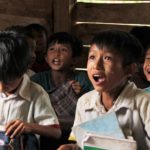
Located in eastern Myanmar, Kayah State is bordered by Thailand to the east, Kayin/Karen State to the south and west and Shan State to the north. Due to decades of conflict, the people of Kayah have endured internal displacement and, for many, migration to neighboring Thailand. Public services are inaccessible to a sizeable proportion of the population and food insecurity is a significant concern. Many remote Kayan speaking communities lack educational support from the government and face significant challenges to provide even a primary education. This results in exceptionally low school completion and literacy rates. Kayan New Generation Youth (KNGY) supports over 9,000 marginalized students...
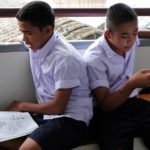
Thousands of migrant children have spent up to ten years at migrant learning centers (MLCs) without receiving official government recognition of their education, meaning their chances of future study and/or employment are limited, leaving them more vulnerable to exploitation. Through Project for Local Empowerment (PLE) support, the Burmese Migrant Workers' Education Committee (BMWEC) negotiated for migrant children to sit for Burma/Myanmar Government Grade 4 and 8 exams within Thailand and Grade 10 national matriculation exams across the border in Myawaddy, Burma. In addition, MLCs are providing a Thai non-formal education (NFE) program for those students intending to stay in Thailand for a longer period. This...

From November 21-23, 2016 World Education Thailand hosted Senior Officials from the Department of Alternative Education (DAE) under the Ministry of Education (MoE) Myanmar in Mae Sot, Tak Province in order to discuss education access for migrant children from Myanmar in Thailand. The visit and MoE engagement with migrant education sought to strengthen coordination and consultation mechanisms for future education planning and policy development at the Department of Alternative Education in Myanmar. The region is home to approximately 14,000 migrant students currently studying at 61 learning centers. After visiting Hsar Mu Htaw Learning Center, the Kilometer 42 Non Formal Primary Education (NFPE) Center and Ban Mae...
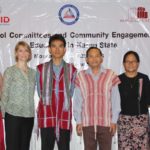
On Monday September 26th 2016, the Karen Education Department (KED) in collaboration with World Education Thailand, launched a research report on 'School Committees and Community Engagement in Education' in Yangon. The KED, established by the Karen National Union to oversee education in Karen State in the 1950's, currently supports over 167,000 students in 1,500 community schools. Support includes teacher training, curriculum design, administration, policy development, material resources and teacher subsidies. The KED faces considerable challenges to program implementation including social and political instability, outbreaks of conflict, and the displacement of communities in Karen State. The national government does not officially recognize community education systems...
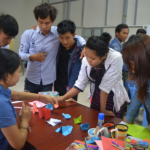
While trekking through mountains in northern Burma during torrential downpours or extreme heat, Htin* knows his job is hard, but he also knows the services he provides are essential to the rural villages he works with. Htin is a mobile teacher trainer for the Karen Teacher Working Group (KTWG), an organization working with schools and education programs in eastern and northern Burma to provide teacher training and community support to education. Htin has been a teacher since 2007 and has been involved with KTWG since 2012. “I had limited knowledge about teaching methodologies and local teaching resources. I always tried to find a way to get more...